

Pearl jewelry has always been a byword for elegance. For a wedding, an evening out or simply to brighten an everyday outfit, a pearl brings a softness nothing else can replace. In this guide, we explain the different types of pearls, how to tell if pearls are real, which piece to choose for each occasion, and how to care for your pearls. You can also explore our natural freshwater pearl jewelry.
Contents
- Why Choose Pearl Jewelry?
- How Is a Pearl Formed?
- Types of Pearls
- How to Tell If Pearls Are Real
- Pearl Quality: What to Look For
- Which Pearl Jewelry for Which Occasion?
- How to Choose Your Pearl Jewelry
- How to Wear Pearls Today
- Pearl Care: How to Look After Your Pearls
- Mistakes to Avoid with Pearls
- Pearl Jewelry Gift Ideas
- Our Pearl Jewelry
- Pearl Jewelry FAQ
Why Choose Pearl Jewelry?
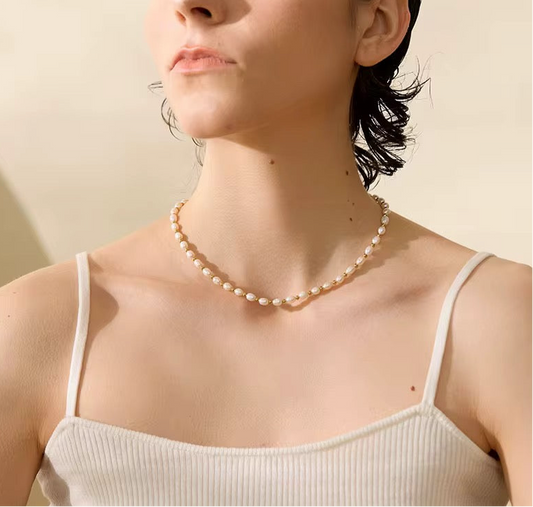
Pearls move through the decades without ever going out of style. You can wear them as a necklace, a bracelet, earrings or a ring, and they go just as well with an evening gown as with jeans and a white shirt. Their soft glow flatters the face.
 Lady Necklace the timeless pearl strand |  Lara Long Necklace long and luminous |  Alba Earrings graphic and elegant |  Florence Hoops pearls, modern style |
Pearls are also one of the oldest adornments in the world. They have been found in prehistoric burial sites, and a pearl discovered in the United Arab Emirates dates back to around 5,500 BC (source: Wikipedia article on pearls (in French)). In Antiquity, pearls were linked to Aphrodite, the goddess of beauty.
In tradition, the pearl symbolizes purity, gentleness and wisdom. It is often given to mark a big moment: a wedding, a birth, a birthday. The properties associated with stones come from crystal healing traditions. They do not replace medical advice or treatment.
How Is a Pearl Formed?
A pearl is born inside a mollusk, most often an oyster or a mussel. When a tiny foreign body slips into its shell, the animal protects itself by coating it, layer after layer, with nacre. This nacre is made of calcium carbonate and proteins.
These thin stacked layers give the pearl its unique glow: light passes through them and bounces from one to the next. The finer and more even the nacre, the more the pearl shines.
Good to know: a pearl is an organic material, and it is soft. Its hardness is 2.5 to 3 on the Mohs scale, according to the GIA Gem Encyclopedia. That is why it needs a little care, as you will see in the pearl care section.
Types of Pearls
Wild natural pearls form in nature with no human intervention at all. They have become extremely rare and very expensive.
The natural freshwater pearls we use are real pearls, formed by mussels in lakes and rivers. They come in a wide variety of shapes, sizes and colors, and they are the pearls we use in our jewelry: every pearl is unique.
Baroque pearls are natural freshwater pearls with an irregular shape. They give a more modern, more bohemian look.
Akoya pearls come from Japan. They are known for their perfectly round shape and bright luster, often white or cream with pink overtones.
Tahitian pearls, from French Polynesia, have dark colors, from silvery gray to black, with green, blue or eggplant overtones.
South Sea pearls, from Australia, Indonesia or the Philippines, are the largest, in white or golden shades.
Here is a quick overview:
| Pearl type | Origin | Shape and colors | Style |
|---|---|---|---|
| Wild natural pearls | Nature, no intervention | Very varied | Collector pieces |
| Natural freshwater pearls | Mussels in lakes and rivers | Round, oval, button; white, cream, pink | Everyday, weddings, gifts |
| Baroque pearls | Mussels in lakes and rivers | Irregular, shifting overtones | Boho, modern |
| Akoya | Japan | Very round; pinkish white | Classic |
| Tahitian | French Polynesia | Gray to black, green or blue overtones | Graphic, bold |
| South Sea | Australia, Indonesia, Philippines | Large; white or golden | Very dressy |
How to Tell If Pearls Are Real
- The rub test: gently rub two pearls against each other. Real pearls catch slightly and leave a fine nacre powder. Fake ones glide without any resistance.
- The tooth test: gently run the pearl along the edge of your teeth. A real pearl feels slightly gritty, a fake one is perfectly smooth.
- A close look: under strong light, a real pearl shows small irregularities. A pearl that is perfectly identical to its neighbors is often fake.
- Temperature: hold the pearl against your cheek or lips. A real pearl feels cool at first, then slowly warms up. Plastic feels warm right away.
- Weight: a real pearl has a reassuring little heft in the hand. Plastic imitations are often too light.
- The drill hole: look at the edge of the hole with a magnifier. On a real pearl it is clean and you can sometimes see the layers of nacre. On a fake, the coating often flakes around the hole.
These tests are a good guide, but none is foolproof. For a valuable piece or a family heirloom, only a gemological laboratory can confirm a pearl's origin, notably with X-rays.
Pearl Quality: What to Look For
Not all pearls are equal. Gemologists look at several criteria, which the GIA Gem Encyclopedia sums up in seven value factors. Here is what to keep in mind to choose with confidence:
- Luster: the most visible criterion. A beautiful pearl reflects light like a soft little mirror. A dull pearl has thin or damaged nacre.
- Shape: perfectly round pearls are the most sought after, but oval, drop or baroque shapes have huge charm and a more current style.
- Size: from a few millimeters to over a centimeter. Small pearls are delicate, large ones instantly make a statement piece.
- Color: white, cream, pink, sometimes with silvery overtones. There is no right color, only the one that suits you.
- Surface: small marks are normal, the signature of a living material. They simply should not jump out at you.
- Matching: on a necklace or a pair of earrings, the pearls should harmonize with each other.
At L'Or Didon, we choose our natural freshwater pearls one by one for their luster and harmony. Want to see the selection? Take a look at our pearl necklaces and our pearl bracelets.
To find the style that feels like you, also read our guide pearl bracelet: which style to choose.
Which Pearl Jewelry for Which Occasion?
Weddings and receptions: a white or cream pearl necklace, like the Lady necklace or the Lady Diana three-strand choker, elevates a wedding dress or an evening outfit.
Evenings out: drop earrings, like Perla or Alba, turn a simple outfit into a dressy look.
At work: a subtle piece, like the Unique bracelet or the Edith mini hoops, adds a touch of elegance without overdoing it.
Every day: baroque pearls with their irregular shapes give a boho chic feel, to wear with jeans or with a dress.
 Lady Diana for a wedding |  Perla for an evening out |  Unique Bracelet for the office |  Edith Hoops for every day |
How to Choose Your Pearl Jewelry
The right pearl jewelry is the piece that feels like you. Here are a few simple pointers.
By neckline. A choker lights up a boat neck or an open neckline. A mid-length pearl necklace sits beautifully on a V-neck. A long necklace lengthens the silhouette and looks great over a fine sweater or a shirt.
| Necklace length | Where it falls | Best with |
|---|---|---|
| Choker (35 to 40 cm / 14 to 16 in) | At the base of the neck | Boat necks, off-the-shoulder tops |
| Princess (42 to 48 cm / 17 to 19 in) | On the collarbones | Almost everything, the go-anywhere length |
| Matinee (50 to 60 cm / 20 to 24 in) | Above the bust | V-necks, open shirts |
| Long (70 cm / 28 in and more) | Below the bust | Fine sweaters, shift dresses, doubled around the neck |
To find the ideal length for your neckline, read our guide on how to choose and wear a pearl necklace.
By skin tone. White pearls brighten fair skin. Cream or pink pearls warm up olive or tanned skin. If in doubt, hold the pearl near your face in daylight: you will see right away whether it lights you up.
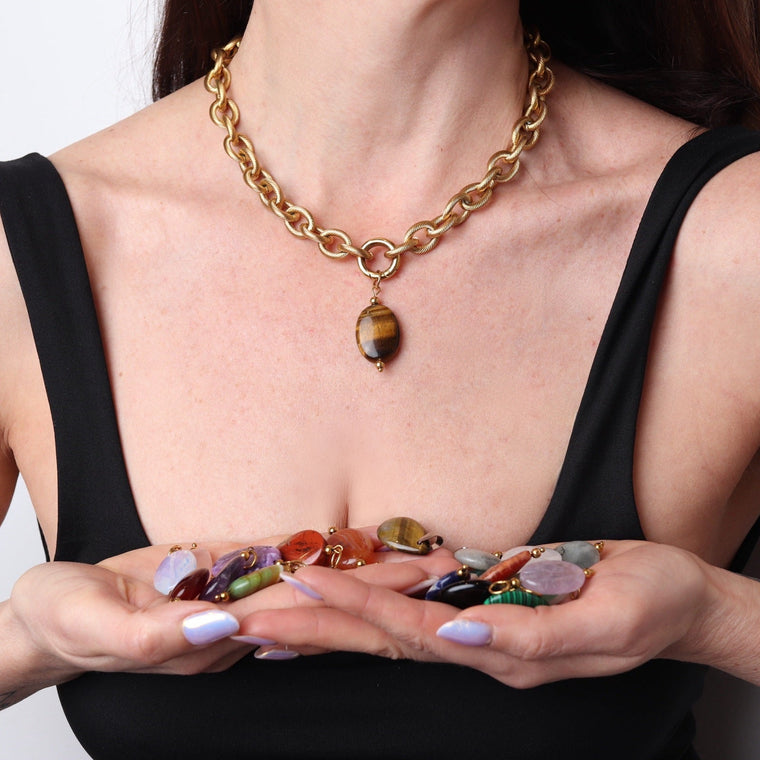
By style. Love the classics? A strand of round pearls. More boho? Baroque pearls. Feeling bold? A piece that mixes pearls, gold-tone chain and stones, for jewelry that gets noticed.
How to Wear Pearls Today
Forget the idea of pearls reserved for special occasions. Today, pearls go with a T-shirt, a blazer or a leather jacket.
- Layered: pair a short pearl necklace with a longer gold-tone chain. The effect is modern and effortless.
- Rock style: a pearl on a chunky chain, like the Aliénor necklace, breaks the prim look and gives a simple outfit an edge.
- With natural stones: the Nour necklace combines pearls and green stones for a pop of color. You can also pair a pearl necklace with a stone pendant from our interchangeable necklaces.
- One statement piece: if you wear big drop earrings, keep the neck bare. One strong piece is enough to make the look.
 Aliénor Necklace rock attitude |  Nour Necklace pearls and color |  Shine Necklace bright and sunny |  Marlyne Necklace easy layering |
Pearl Care: How to Look After Your Pearls
- Always the last step: put your pearls on after perfume, lotion and hairspray, which dull the nacre.
- A soft cloth: wipe them after wearing with a soft, dry cloth. No cleaning products.
- Separate storage: keep them in their pouch, away from your other jewelry, to avoid scratches.
- No water: take your pearls off for the shower, the pool, the sea and sports. Chlorine, salt and sweat damage the nacre.
- Wear them often: nacre loves contact with skin, which helps it keep its glow. A pearl forgotten in a drawer eventually loses its shine.
Our settings are made of stainless steel with an 18k fine gold finish. Steel stands up well to daily wear, and we explain how to keep it shiny in our article on stainless steel jewelry and how to care for it. All our tips are also on our Jewelry Care page.
Mistakes to Avoid with Pearls
A few everyday habits are enough to damage a pearl. Here are the most common:
- Storing them loose with rings and bracelets: metals and stones scratch nacre, which is softer.
- Cleaning them with a product such as jewelry cleaner, vinegar or toothpaste: they eat into the nacre. A soft cloth is all you need.
- Sealing them in an airtight plastic bag for months: nacre needs a little air. Choose a fabric pouch instead.
- Leaving them in the sun or near a heat source: the pearl can dry out and lose its luster.
Pearl Jewelry Gift Ideas
Pearl jewelry is a gift that almost never misses. It appeals to every generation and lasts for years.
- For a mom: a delicate pearl necklace or bracelet to wear every day. Find more ideas in our article jewelry gifts for mom.
- For a bride-to-be: drop earrings like Romy, or a pearl choker for the big day and long after.
- For Christmas: a long pearl necklace or pearl hoops, easy to give without knowing a size. Our selection 10 Christmas jewelry gift ideas can inspire you.
Our high-end fashion jewellery comes with a 1-year warranty against manufacturing defects. The gift box is free from €89, and a handwritten note comes with your order.
Our Pearl Jewelry
Our latest pearl creations, for every style:
- Long necklaces: the natural freshwater pearl long necklace, delicate and luminous, and the Lara long necklace, accented with cubic zirconia.
- Modern necklaces: the Aliénor rock-style necklace, and the Nour necklace, which combines pearls and green stones. For evenings out, the Séraphine bib necklace is worn as a choker, with its natural freshwater pearl fringes cascading down.
- Bracelets: the natural freshwater pearl and gold-tone chain bracelet, the Duo bracelet, and the new Violette bracelet, which blends natural freshwater pearls with small faceted stones in warm tones.
- Earrings: the Romy drop earrings, perfect for a bride, the chunky Florence hoops, and the new Blanche hoops, a small smooth ring with a swinging oval natural freshwater pearl, in gold-tone or silver-tone.
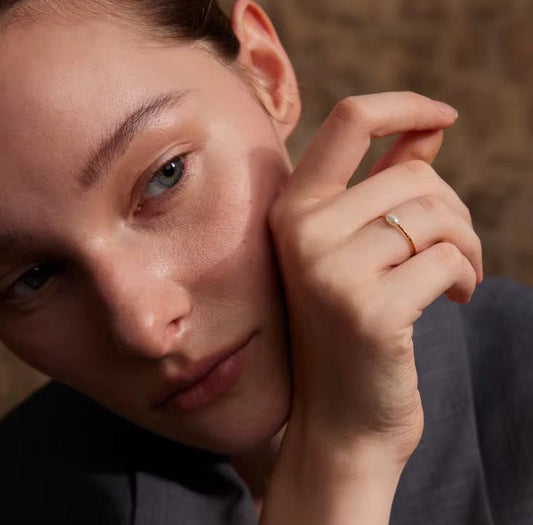
- Rings: the slim Laure ring with its mini pearl.
- Jewelry sets: the Pure set, a delicate necklace and stud earrings in natural freshwater pearls, plus the Nour and Noura necklace and bracelet sets, ready to give.
 Natural Pearl Long Necklace delicate and luminous |  Pearl and Chain Bracelet delicate on the wrist |  Romy Earrings for a bride |  Laure Ring a mini pearl |
 Pure Set for a bride or a mom | Nour Set pearls and green stones |  Noura Set one large flat pearl |
 Séraphine Necklace the pearl bib that gets noticed |  Blanche Hoops your everyday pearl |  Violette Bracelet pearls and color on the wrist |
At L'Or Didon, our natural freshwater pearls are set by hand on stainless steel with an 18k fine gold finish: jewelry made to handle everyday wear. Discover the whole pearl jewelry collection, or come try the pieces on at our boutique in Le Marais, Paris (3 rue Madame de Sévigné, Saint-Paul metro), open daily from 11 am to 8 pm.
Pearl Jewelry FAQ
What is the difference between a wild natural pearl and a natural freshwater pearl?
A wild natural pearl forms entirely on its own in nature, which makes it very rare and very expensive. Our natural freshwater pearls are real pearls formed by mussels in lakes and rivers: they keep the glow and unique character of nacre, at an accessible price.
Can you wear pearl jewelry every day?
Yes, as long as you put it on last, after perfume and lotion, and take it off for the shower, sports and sleep. Treated well, a pearl can be worn daily for years.
Do pearls turn yellow over time?
A pearl can lose its luster or take on a warmer tone if it is exposed to cosmetics and sweat, or stored too dry for too long. A soft cloth after each wear and storage away from light limit this.
How can I tell if my pearls are real?
The rub test and the tooth test are the most reliable at home: a real pearl catches and feels slightly gritty. For certainty, only a gemological laboratory can decide.
Is pearl jewelry suitable for sensitive skin?
Our natural freshwater pearls are set on stainless steel with an 18k fine gold finish, a metal appreciated by sensitive skin. Every piece comes with a 1-year warranty against manufacturing defects.
Article updated on October 28, 2026.